Electrical training is the first step toward your future as an electrician. During your training, you’ll learn the fundamentals of electrical work, such as Electrical Theory, Mathematics and Load Calculations, which are necessary to prepare you for work in the electrical field.
These classes and more are included in Delta Technical College (DTC)’s Industrial, Commercial & Residential (I/C/R) Electrician Program, which gives you the skills and training necessary for entry-level employment as an electrician, electrician’s helper or electrical apprentice.
Let’s break down the skills, classes, and techniques you’ll learn during electrician school.
What Should You Expect in Electrical Trade School?
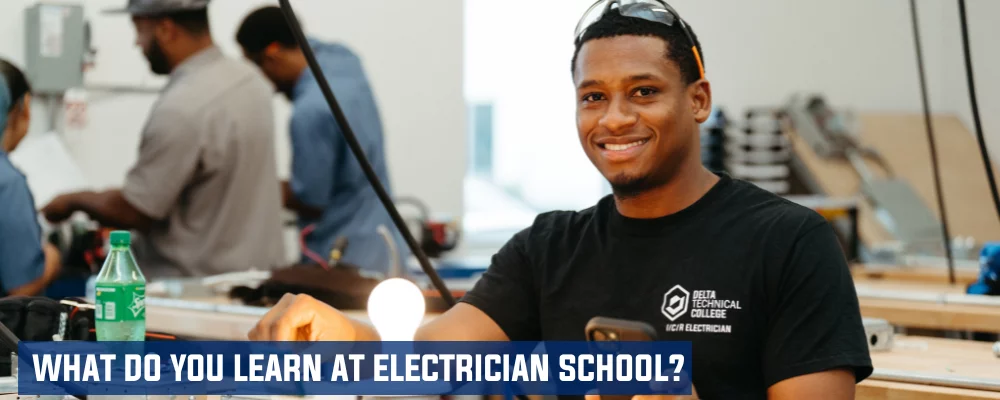
The I/C/R Electrician Program at DTC combines hands-on training with classroom instruction to prepare you with the skills required for entry-level employment as an electrician.
Classes include:
- Electrical Theory/NEC/Grounding
- Meters/Lighting/Blueprints
- Electrical Mathematics/Conduit Bending
- Conduit Bending/Terminations/Standby Systems
- Overcurrent Protection/3 Phase Dist/Load Calc.
- Motors/FA Systems/VDV/Controls
- Wiring
- Load calculations
- And more!
The Electrician Program takes less than a year to complete. You’ll gain the technical skills you need to install, maintain, and troubleshoot a variety of electrical systems, and enter the workforce prepared for an entry-level position.
How Do You Get Licensed After Electrical Trade School?
In some states, you may be required to get an electrician’s license, which usually involves taking and passing an exam administered by the state electrical board. These exams will test your understanding of local and regional building codes and the National Electrical Code.
In Mississippi for example, you need an electrician license, most of which are issued on a local level. It’s important to research the licensing requirements in the location you plan to work as an electrician. In Tennessee, a Limited Licensed Electrician (LLE) is accepted statewide and required for electrical work where the total cost is $25,000 or more.
You can also earn electrician designations as you advance in your career, such as master electrician. This designation allows you to work without supervision, work on government contracts, hire other electricians and perform more complex jobs, from planning to supervision and construction. It usually takes seven to ten years of work experience, plus education hours, to achieve the rank of master electrician.
Some electricians choose to specialize by obtaining specialty licensures, available in certain jurisdictions. The specialties may include maintenance electrician, outside wireman, solar, elevator/escalator, electrical signs, HVAC, residential/commercial and low voltage.
Obtaining experience and certifications in areas that may be growing in popularity, such as green homes, wireless and surround sound, can also expand your career opportunities and even earning potential.
Interested in Learning More About DTC?
Fill out the form below to receive info about our career training programs.
Is Becoming an Electrician Right for You?
The job outlook for electricians from 2023 to 2033 is estimated to grow 11%, which is much faster than the national average for all occupations (4%).
It’s important to consider that most electricians work full-time, including weekends, evenings and during emergency situations, like blackouts. There is also some physical risk involved in becoming an electrician, including electric shock, burns, cuts and falls. It’s imperative to have the right training and skills so that you can remain safe on the job.
Start Your Career Path as an Electrician
If you’re interested in becoming an electrician, DTC is here to help!
Contact the Admissions Team to learn more or schedule a tour of your local campus.
SOURCES
- https://www.bls.gov/ooh/construction-and-extraction/electricians.htm
- https://buildops.com/resources/electrical-license-exam/
- https://www.bls.gov/ooh/construction-and-extraction/electricians.htm#tab-2
- https://www.tealhq.com/certifications/electrician
- https://www.indeed.com/career-advice/finding-a-job/journeyman-vs-master-electrician
- https://www.fieldpromax.com/blog/how-to-become-a-master-electrician#912a4552-72d2-430d-b4e4-8ffb8cb24c62
- https://www.nyc.gov/site/buildings/industry/obtain-a-master-and-special-electrician-license.page