Electrician Course Description
48 Weeks / 1200 Clock Hours / 300 Additional Outside Clock Hours / 48 Semester Credits
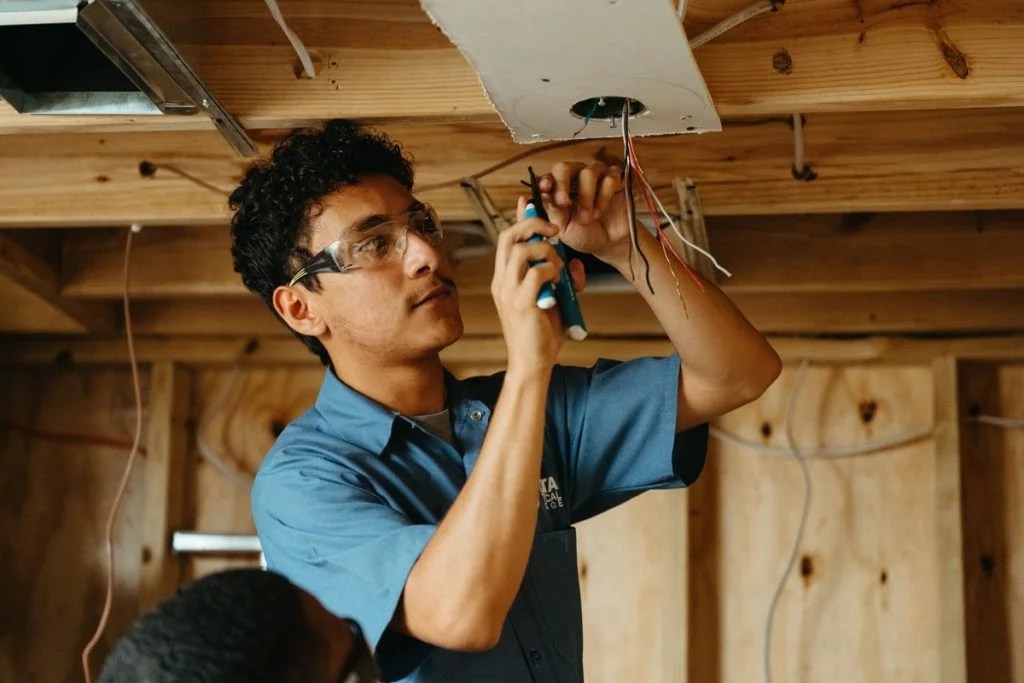
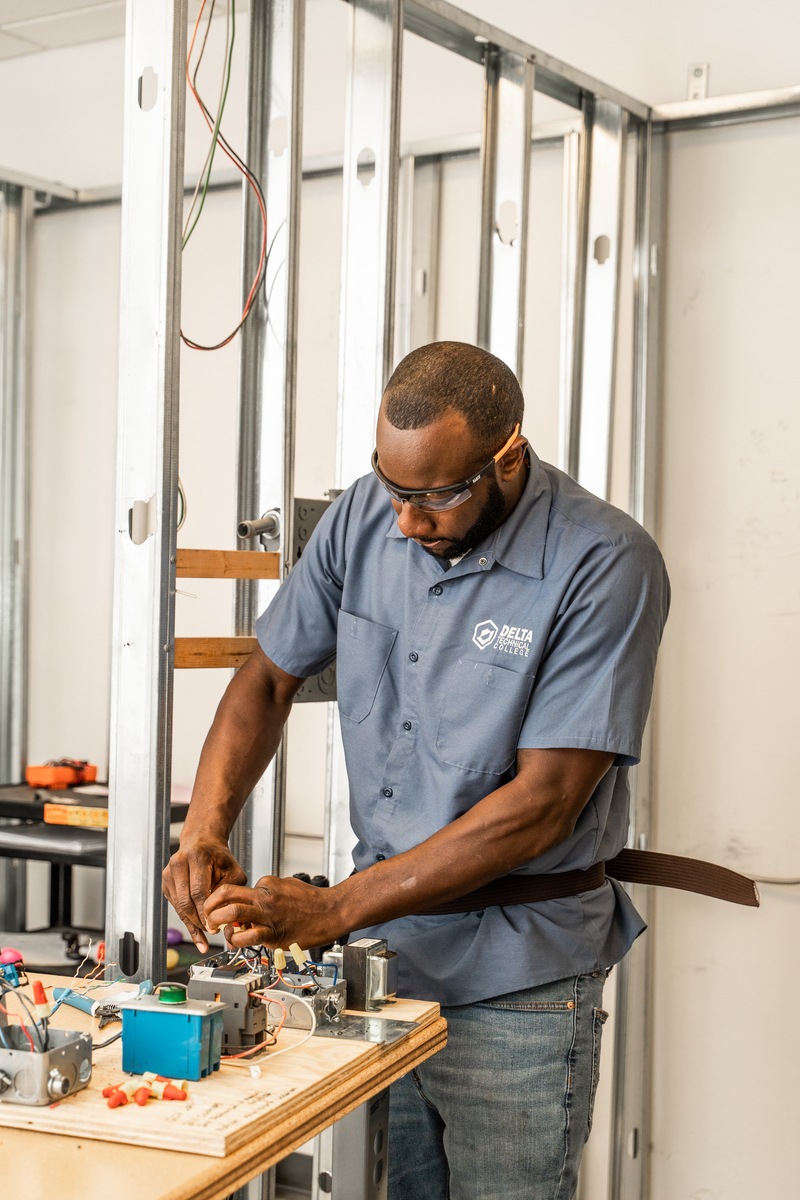
The objective of the Electrician Course is for students to gain entry level employment as an Electrician, Electricians Helper, or a Electrical Apprentice. This program consists of (8) eight 6-week modules. Each module contains basic subject content for electrical theory, mathematics, wiring, load calculations, motors, and electrical controls. This course also covers field and shop safety. Completion of all 8 modules with a minimum grade point average of 2.0(C) entitles the student to a diploma as an Industrial, Commercial, and Residential Electrician.
Course Subject Descriptions Are As Follows:
(click on course title for full catalog listing)
- Module 1. Electrical Theory
- Module 2. Electrical Mathematics
- Module 3. Wiring / Blueprints
- Module 4. NEC2 / Lighting
- Module 5. Load Calculations / Motor Controls
- Module 6. NEC3 / Motor Controls
- Module 7. Load Calculations / Alarms
- Module 8. Nec4 / HVAC
Module 1 –Electrical Theory
75 Clock Hours-Lecture / 75 Clock Hours-Lab / 37.50 Additional Outside Clock Hours / 6 Credits
- 1. OSHA 10 hour construction program.
- 2. Demonstrate safe working habits in construction.
- 3. Define voltage and the ways it can be produced.
- 4. Understand the different types of meters to measure voltage, current, and resistance.
- 5. Understand the power formula to calculate the amount of power used by a circuit.
- 6. Define the units of measurements that are used to measure the properties of electricity.
Module 2 –Electrical Mathematics
75 Clock Hours-Lecture / 75 Clock Hours-Lab / 37.50 Additional Outside Clock Hours / 6 Credits
- 1. Understanding the history and need for the National Electric Code.
- 2. Understand the layout of the NEC code book.
- 3. Navigate the NEC code book for various problem solving applications.
- 4. Solve various mathematical word problems pertaining to electricity.
- 5. Understand Trigonometric functions, sines, cosines, and tangents.
- 6. Understand the functions of algebra and trigonometry.
Module 3 –Wiring / Blueprints
75 Clock Hours-Lecture / 75 Clock Hours-Lab / 37.50 Additional Outside Clock Hours / 6 Credits
- 1. Understand how to calculate electrical service requirements for residential and commercial buildings.
- 2. Identify different box sizes in relationship to different wiring methods.
- 3. Understand conduit bending methods and calculations.
- 4. Understand methods and techniques for metering and testing single and three phase power/per the NEC
- 5. Identify and understand the WYE and DELTA connected three phase electrical service.
- 6. Understand electrical blueprints and schematics associated with the electrical industry.
Module 4 –NEC 2 / Lighting
75 Clock Hours-Lecture / 75 Clock Hours-Lab / 37.50 Additional Outside Clock Hours / 6 Credits
- 1. Understand the purpose of the NEC.
- 2. Explain and understand how to navigate the NEC.
- 3. Identify and explain different types of lighting and discuss disadvantages and advantages of
- each, along with the installation process with each different lamp and housing combination.
- 4. Understand the workings of single pole, double pole, 3-way and 4-way switches as well as
- safety switches
- 5. Install and trouble shoot ground fault interrupters
- 6. Understand the workings of straight blade, twist lock and other various types of receptacles.
Module 5 –Load Calculations / Motor Controls
75 Clock Hours-Lecture / 75 Clock Hours-Lab / 37.50 Additional Outside Clock Hours / 6 Credits
- 1. Understand single and three-phase load calculations.
- 2. Identify and use the correct code for residential kitchen equipment.
- 3. Identify cable tray and raceway, sizes and types
- 4. Understand motor contactors and relays, both physically and through blue prints and
- schematics, for the operation of motors.
- 5. Understand size requirements for contactors and relays in relationship to motor size and loads.
- 6. Connect motor controllers in a particular sequence to operate according to NEC regulations.
Module 6–NEC 3 / Motor Controls
75 Clock Hours-Lecture / 75 Clock Hours-Lab / 37.50 Additional Outside Clock Hours / 6 Credits
- 1. Explain the NEC requirements.
- 2. Understand how to navigate the NEC
- 3. Explain the current devices for electric motors.
- 4. Understand the power factors of electric motors and understand how to improve on them.
- 5. Explain how to install non-programmable and programmable motor circuit protectors as well
- as solid state overload relays.
- 6. Understand adjustable frequency drives in the application of motor controls.
Module 7–Load Calculations / Alarms
75 Clock Hours-Lecture / 75 Clock Hours-Lab / 37.50 Additional Outside Clock Hours / 6 Credits
- 1. Understand circuit breakers and fuses for various electrical loads.
- 2. Understand the application of tap rules.
- 3. Explain the operation of automatic and manual switches.
- 4. Understand different battery types as well as understand how batteries charge and discharge.
- 5. Understand the application of the NEC in the application of emergency power systems.
- 6. Explain the basic functions of alarms as well as closed circuit television.
Module 8–NEC 4 / HVAC
75 Clock Hours-Lecture / 75 Clock Hours-Lab / 37.50 Additional Outside Clock Hours / 6 Credits
- 1. Explain the NEC requirements.
- 2. Understand how to navigate the NEC.
- 3. Explain all major components common to all HVAC systems.
- 4. Understand and explain the different types of thermostats.
- 5. Understand HVAC controls and functions.
- 6. Understand telephone networking and its applications.
- BACK TO TOP
48 Weeks / 1200 Clock Hours / 300 Additional Outside Clock Hours / 48 Semester Credits
The objective of the Electrician Course is for students to gain entry level employment as an Electrician, Electricians Helper, or a Electrical Apprentice. This program consists of (8) eight 6-week modules. Each module contains basic subject content for electrical theory, mathematics, wiring, load calculations, motors, and electrical controls. This course also covers field and shop safety. Completion of all 8 modules with a minimum grade point average of 2.0(C) entitles the student to a diploma as an Industrial, Commercial, and Residential Electrician.
Course Subject Descriptions Are As Follows:
(click on course title for full catalog listing)
- Module 1. Electrical Theory
- Module 2. Electrical Mathematics
- Module 3. Wiring / Blueprints
- Module 4. NEC2 / Lighting
- Module 5. Load Calculations / Motor Controls
- Module 6. NEC3 / Motor Controls
- Module 7. Load Calculations / Alarms
- Module 8. Nec4 / HVAC
Module 1 –Electrical Theory
75 Clock Hours-Lecture / 75 Clock Hours-Lab / 37.50 Additional Outside Clock Hours / 6 Credits
- 1. OSHA 10 hour construction program.
- 2. Demonstrate safe working habits in construction.
- 3. Define voltage and the ways it can be produced.
- 4. Understand the different types of meters to measure voltage, current, and resistance.
- 5. Understand the power formula to calculate the amount of power used by a circuit.
- 6. Define the units of measurements that are used to measure the properties of electricity.
Module 2 –Electrical Mathematics
75 Clock Hours-Lecture / 75 Clock Hours-Lab / 37.50 Additional Outside Clock Hours / 6 Credits
- 1. Understanding the history and need for the National Electric Code.
- 2. Understand the layout of the NEC code book.
- 3. Navigate the NEC code book for various problem solving applications.
- 4. Solve various mathematical word problems pertaining to electricity.
- 5. Understand Trigonometric functions, sines, cosines, and tangents.
- 6. Understand the functions of algebra and trigonometry.
Module 3 –Wiring / Blueprints
75 Clock Hours-Lecture / 75 Clock Hours-Lab / 37.50 Additional Outside Clock Hours / 6 Credits
- 1. Understand how to calculate electrical service requirements for residential and commercial buildings.
- 2. Identify different box sizes in relationship to different wiring methods.
- 3. Understand conduit bending methods and calculations.
- 4. Understand methods and techniques for metering and testing single and three phase power/per the NEC
- 5. Identify and understand the WYE and DELTA connected three phase electrical service.
- 6. Understand electrical blueprints and schematics associated with the electrical industry.
Module 4 –NEC 2 / Lighting
75 Clock Hours-Lecture / 75 Clock Hours-Lab / 37.50 Additional Outside Clock Hours / 6 Credits
- 1. Understand the purpose of the NEC.
- 2. Explain and understand how to navigate the NEC.
- 3. Identify and explain different types of lighting and discuss disadvantages and advantages of
- each, along with the installation process with each different lamp and housing combination.
- 4. Understand the workings of single pole, double pole, 3-way and 4-way switches as well as
- safety switches
- 5. Install and trouble shoot ground fault interrupters
- 6. Understand the workings of straight blade, twist lock and other various types of receptacles.
Module 5 –Load Calculations / Motor Controls
75 Clock Hours-Lecture / 75 Clock Hours-Lab / 37.50 Additional Outside Clock Hours / 6 Credits
- 1. Understand single and three-phase load calculations.
- 2. Identify and use the correct code for residential kitchen equipment.
- 3. Identify cable tray and raceway, sizes and types
- 4. Understand motor contactors and relays, both physically and through blue prints and
- schematics, for the operation of motors.
- 5. Understand size requirements for contactors and relays in relationship to motor size and loads.
- 6. Connect motor controllers in a particular sequence to operate according to NEC regulations.
Module 6–NEC 3 / Motor Controls
75 Clock Hours-Lecture / 75 Clock Hours-Lab / 37.50 Additional Outside Clock Hours / 6 Credits
- 1. Explain the NEC requirements.
- 2. Understand how to navigate the NEC
- 3. Explain the current devices for electric motors.
- 4. Understand the power factors of electric motors and understand how to improve on them.
- 5. Explain how to install non-programmable and programmable motor circuit protectors as well
- as solid state overload relays.
- 6. Understand adjustable frequency drives in the application of motor controls.
Module 7–Load Calculations / Alarms
75 Clock Hours-Lecture / 75 Clock Hours-Lab / 37.50 Additional Outside Clock Hours / 6 Credits
- 1. Understand circuit breakers and fuses for various electrical loads.
- 2. Understand the application of tap rules.
- 3. Explain the operation of automatic and manual switches.
- 4. Understand different battery types as well as understand how batteries charge and discharge.
- 5. Understand the application of the NEC in the application of emergency power systems.
- 6. Explain the basic functions of alarms as well as closed circuit television.
Module 8–NEC 4 / HVAC
75 Clock Hours-Lecture / 75 Clock Hours-Lab / 37.50 Additional Outside Clock Hours / 6 Credits
- 1. Explain the NEC requirements.
- 2. Understand how to navigate the NEC.
- 3. Explain all major components common to all HVAC systems.
- 4. Understand and explain the different types of thermostats.
- 5. Understand HVAC controls and functions.
- 6. Understand telephone networking and its applications.
- BACK TO TOP